An Unexpected Journey: Turning The Whispering Amulet into a Webtoon
It's been a little while since I closed the drawer on my writing desk, gave some updates on The Lost Relics Mysteries, and got excited enough to write here, so in a development that should come as no surprise, I couldn’t stay away from my stories for long - finally it’s time to share what I've been working on behind the scenes.
When I wrote the novel, I always had a very clear picture of Ancient Egypt in my mind. Every courtyard, every temple, every hidden passage beneath the estate already existed visually before I wrote the words. As both an author and an artist, I naturally think in pictures as much as prose, so adapting the story into a Webtoon feels less like creating something new and more like revealing the version that has always existed in my imagination.
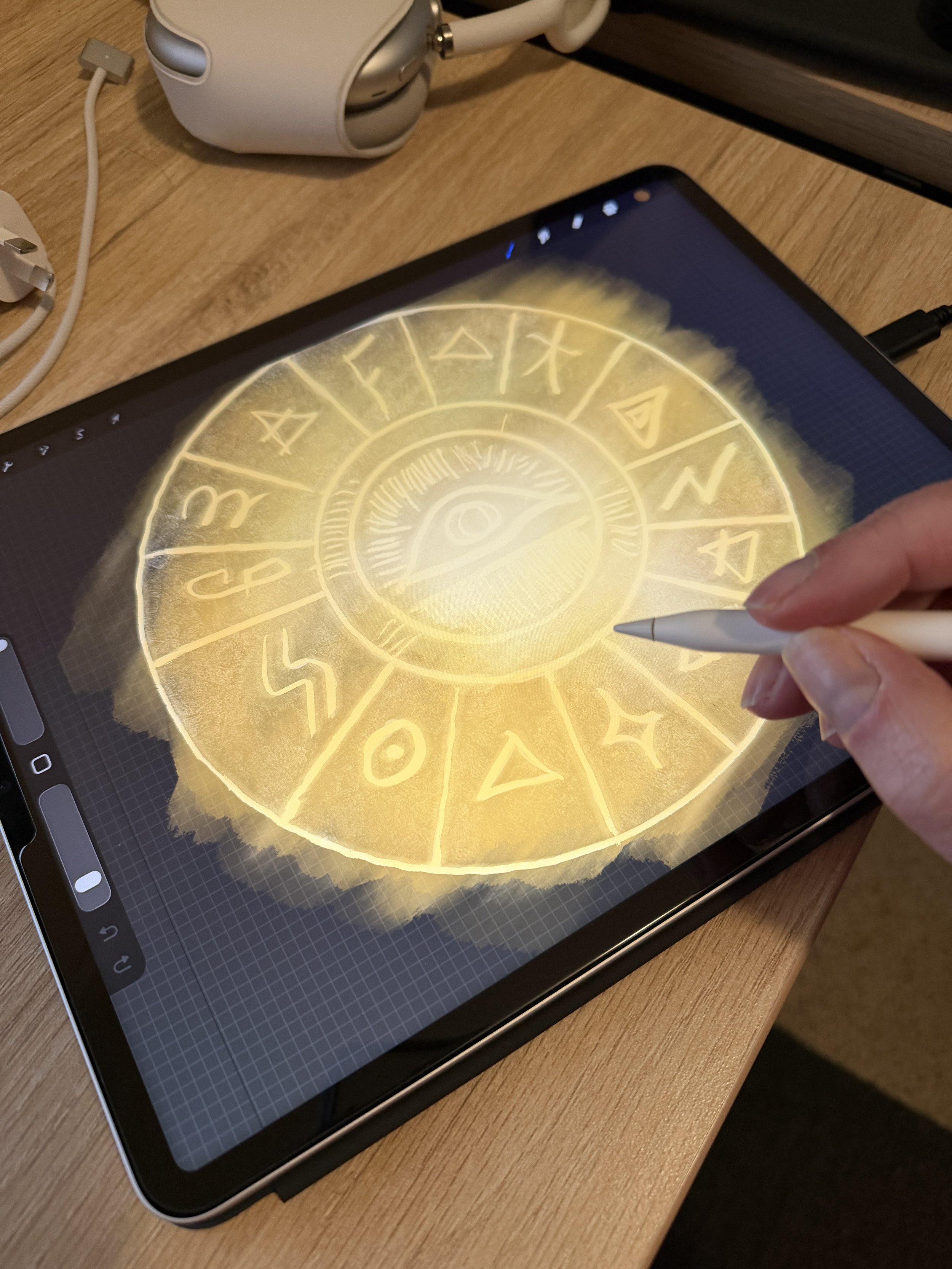
My workspace: drawing on the iPad, concept art from ‘The Whispering Amulet’ .
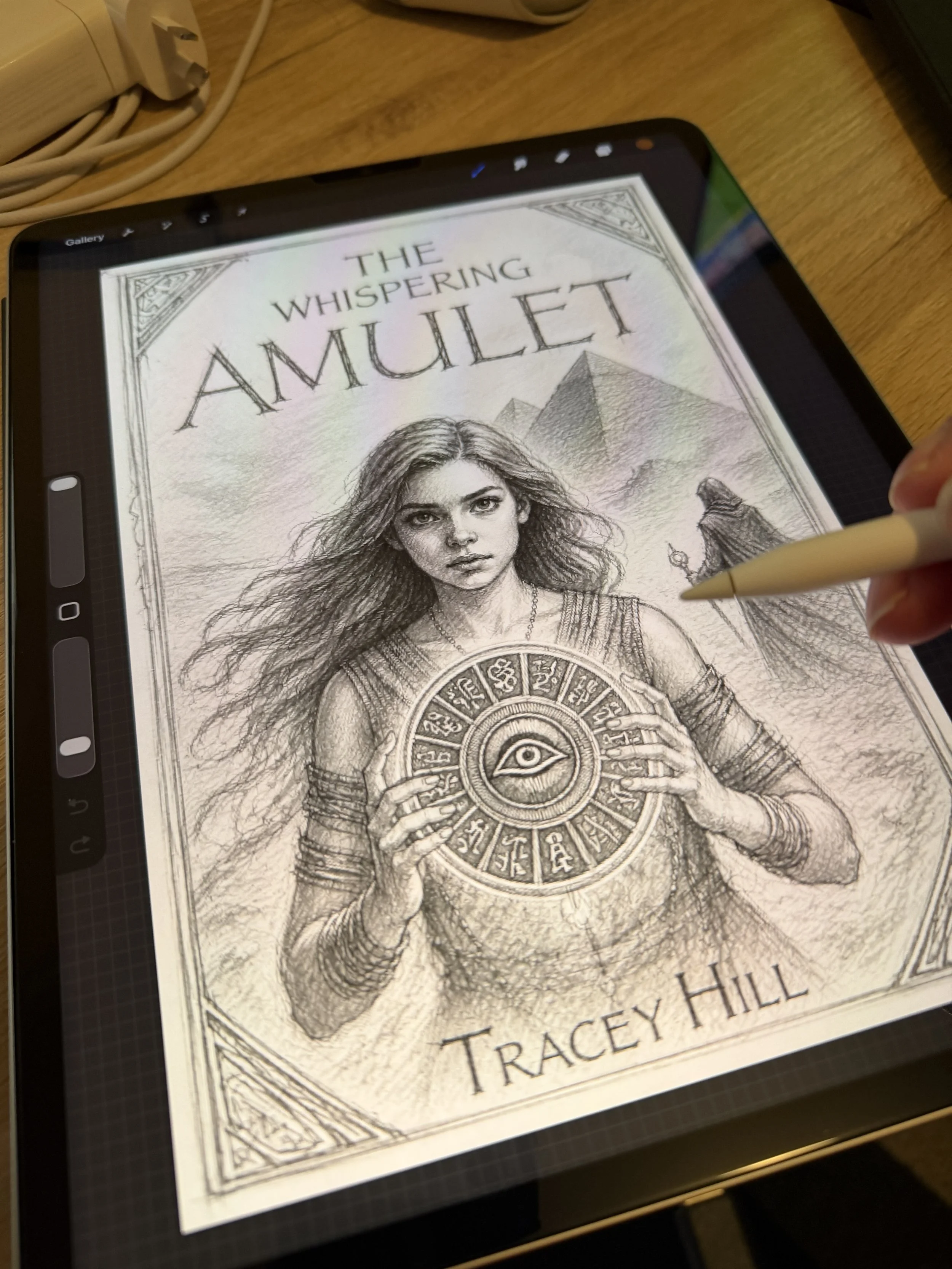
Refined image for the cover. in contrast to the simplified webtoon image.
I've always considered myself both an artist and a writer. Long before I became a software engineer, I was filling sketchbooks and writing stories—The Whispering Amulet itself was first drafted when I was a teenager. Those creative interests eventually led me to formal study, completing a Bachelor of Contemporary Arts followed by a Master of Teaching specialising in Media Arts and Visual Arts. Alongside that, I built a career in software engineering. While those paths might seem quite different, they've always complemented one another, each influencing the way I approach creativity, problem-solving and storytelling.
Creating a Webtoon feels like bringing all of those experiences together.
Writing the novel gave me the story.
My arts background provides the visual language to tell it.
My software engineering background has unexpectedly influenced how I create it.
Learning the Webtoon Workflow
Although I've worked digitally for years, sequential storytelling is its own discipline.
Unlike illustrating a single scene, a Webtoon is about rhythm, pacing and emotion. Every panel needs to guide the reader naturally down the page while conveying movement, atmosphere and character. A paragraph in the novel might become half a dozen carefully composed panels, each revealing just enough to keep the story flowing.
I've spent the last few months refining a workflow that lets me move efficiently between planning, sketching and production.
I switch between Procreate and Photoshop as my iPad has become my digital sketchbook. It's where character expressions are explored, costumes evolve, and rough environments begin to take shape.
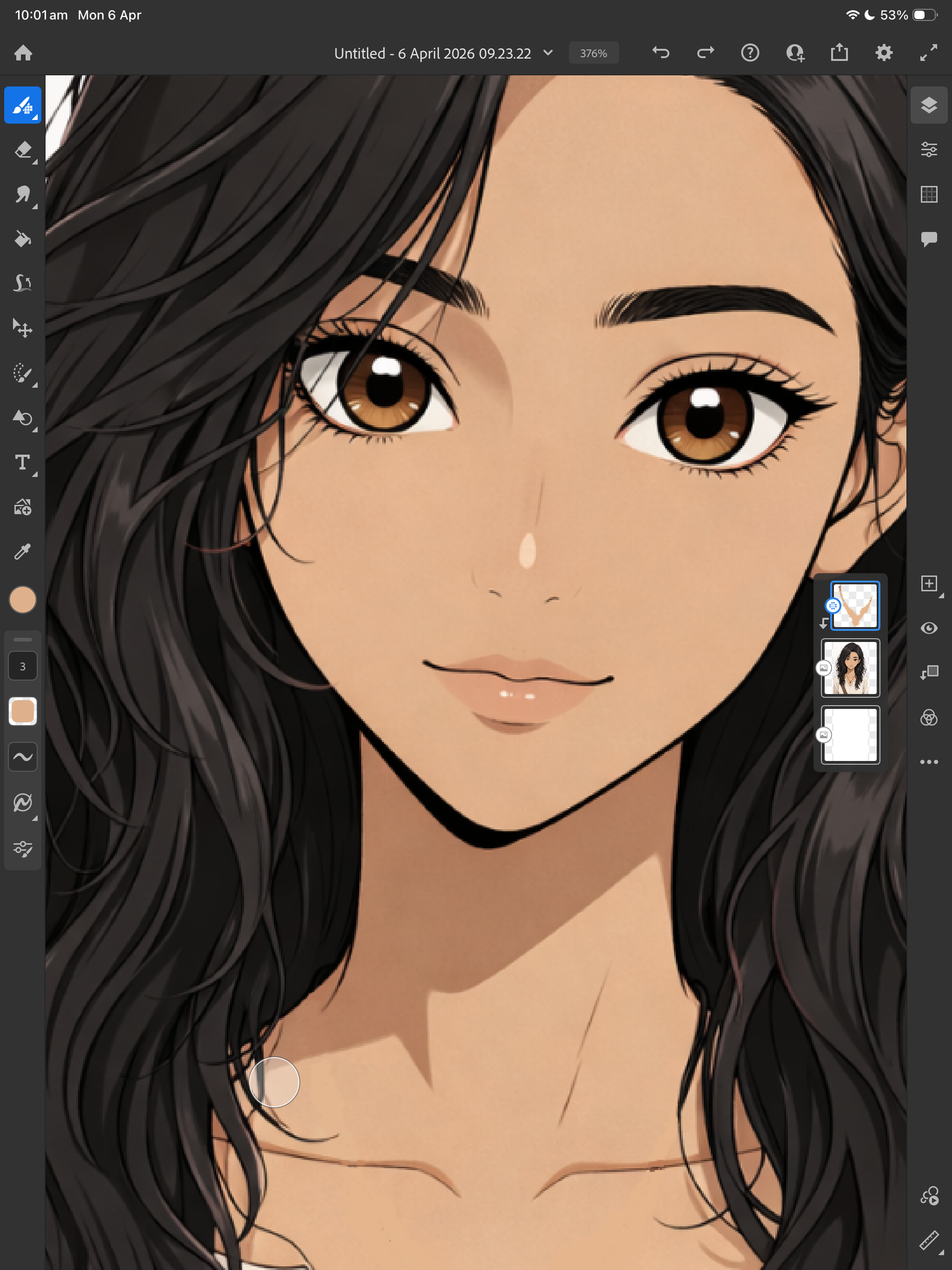
Sekhet in ‘The Whispering Amulet’.
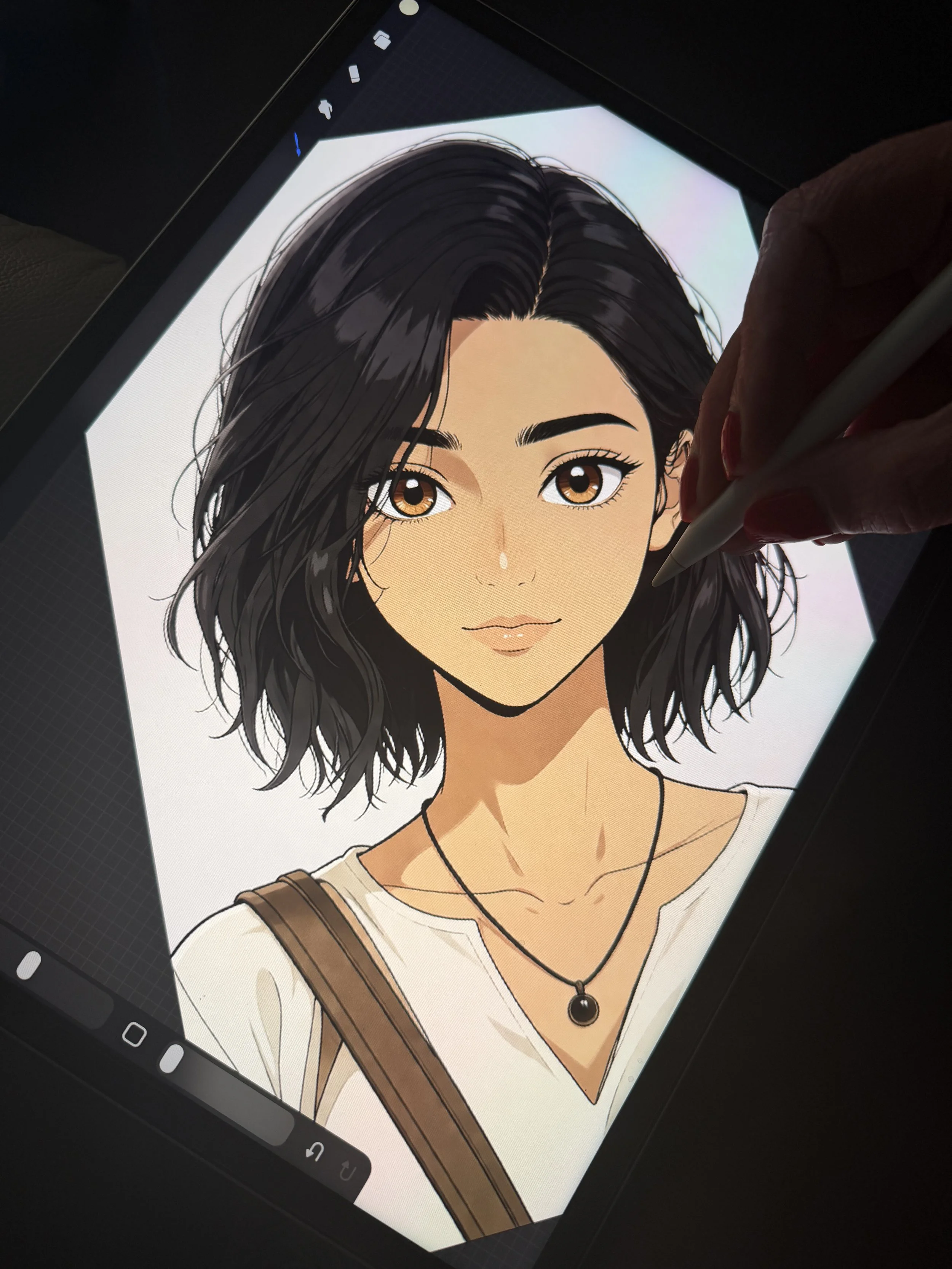
Sekhet in ‘The Mask of Memphis’.
PureRef has become indispensable for organising the enormous collection of visual references needed to keep Ancient Egypt feeling authentic. From architecture and clothing to jewellery, landscapes, colour palettes and historical artefacts, having everything visible in one place makes it much easier to maintain consistency throughout the series.
Once concepts are established, Clip Studio Paint takes over for production work. It's a remarkably capable tool for comics, with excellent support for inking, panel layouts and long-form illustration. It's easy to see why it's become an industry standard for comic and manga creators.
Building While Creating
As I've worked through this process, I've noticed something interesting.
Producing a Webtoon isn't just about drawing.
It's managing hundreds—eventually thousands—of panels. It's tracking recurring characters, maintaining visual consistency, organising reference material, planning episode structure, keeping production notes and remembering countless tiny details that readers never consciously notice but absolutely feel.
The software engineer in me couldn't help but start thinking about better ways to manage that process.
So alongside adapting The Whispering Amulet, I've quietly been working with a local who’s making something new.
Introducing Vctryx
Vctryx is a Webtoon production suite being developed here in Tasmania.
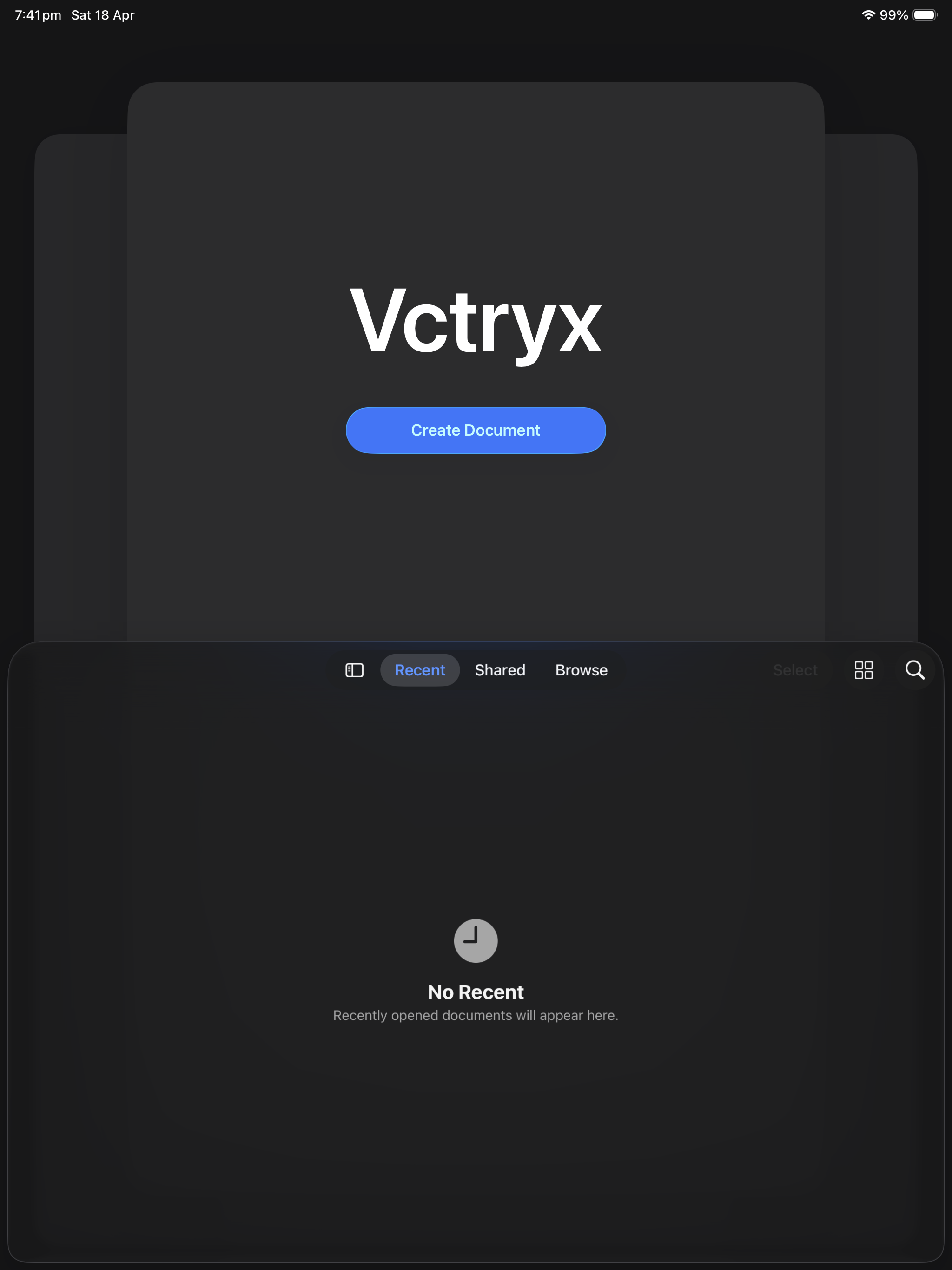
Vctryx home screen
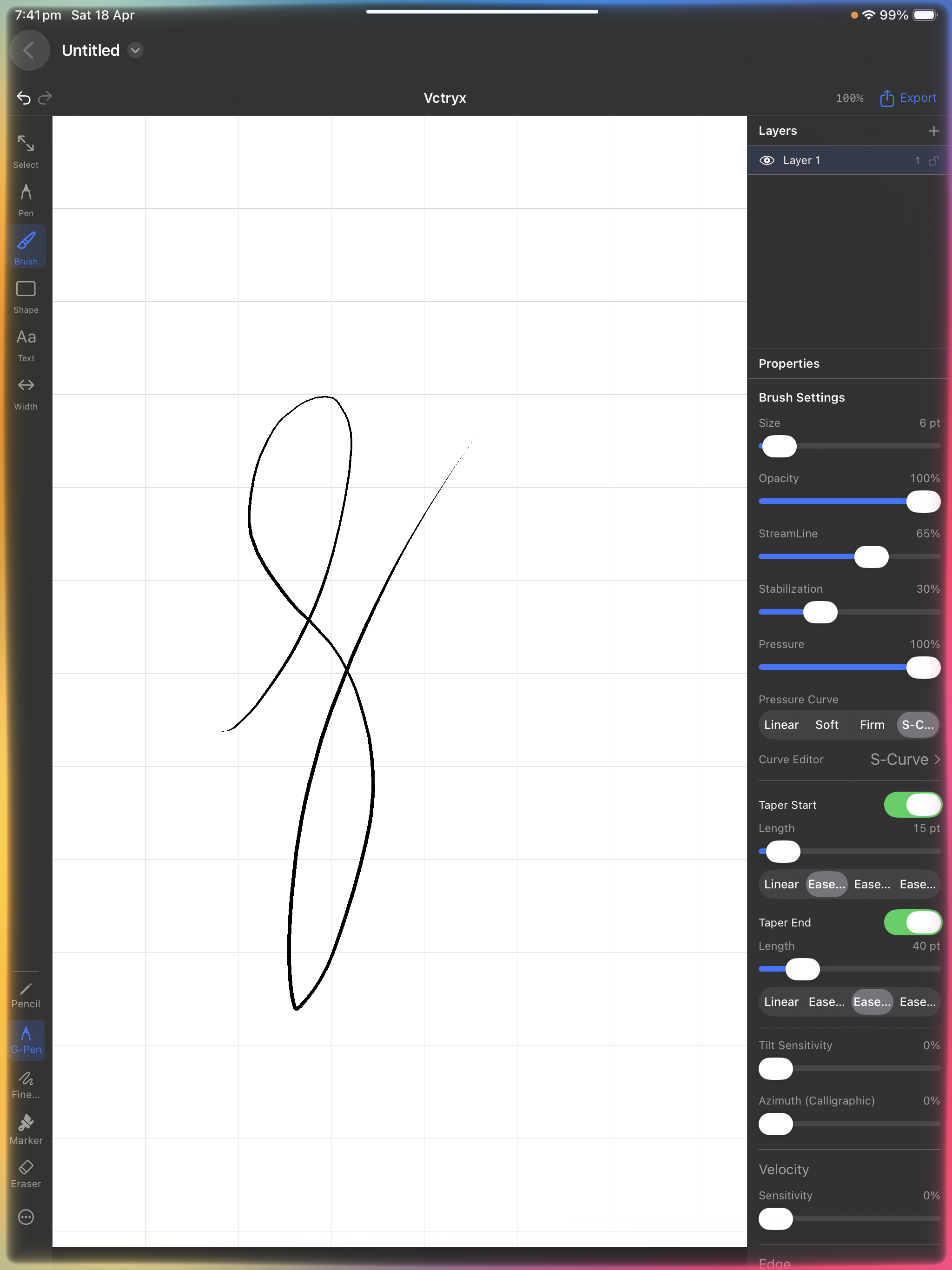
Vector drawing in Vctryx
Rather than replacing illustration software, the goal is to create a companion platform that helps creators organise the entire production pipeline around it. Think character libraries, asset management, episode planning, production tracking, continuity tools, project organisation and workflows designed specifically for long-form vertical storytelling.
Every challenge I encounter while adapting The Whispering Amulet feeds directly back into the design of Vctryx. In many ways, the Webtoon has become the perfect real-world test project.
Instead of designing software based on assumptions, what’s being built are the tools I genuinely wish I had while creating the series.
Looking Ahead
This project has reminded me how interconnected creativity can be.
Writing, illustration, design and software development might seem like very different disciplines, but for me they've always been part of the same conversation. Each one informs the others, and this adaptation has become the place where they finally meet.
Over the coming months you’ll see more of the process here on the website - character designs, environment studies, glimpses into my production workflow, and updates on both the Webtoon and the development of Vctryx.
It's still early days, but watching The Whispering Amulet evolve from a novel into a visual story has been one of the most rewarding creative experiences I've undertaken.
Thank you to everyone who has continued to support my writing. I can't wait to share Sekhet's adventures with you in an entirely new way, one panel at a time.
